Exploring the Versatility of Custom Hoppers for Various Industries
Understanding Custom Process Hoppers and Their Functions
The Role of Hoppers in Manufacturing
Custom process hoppers serve a critical function in the manufacturing landscape. These structures store, transport, and dispense bulk materials, significantly enhancing operational efficiency. In various settings, hoppers facilitate the seamless movement of raw materials through production lines, ensuring that processes run smoothly and without interruptions. Their design allows them to handle a wide range of materials, from granules and powders to more substantial loads like concrete or scrap. By integrating a custom hopper into a manufacturing process, companies can optimize workflows, reduce manual handling, and maintain consistent material flow, which is essential for meeting production targets. The strategic placement of hoppers in manufacturing lines enhances productivity and minimizes downtime, making them indispensable tools in any efficient operation.
Types of Materials Handled by Custom Hoppers
Custom process hoppers are versatile enough to handle a broad spectrum of materials. Industries utilize them to manage solids, liquids, and even bulk materials. In the food industry, for instance, hoppers can store grains or powdered ingredients efficiently, while in the construction sector, they accommodate heavy materials like concrete and aggregates. Recycling facilities also benefit from custom hoppers, which manage recyclables—such as plastics and metals—ensuring proper sorting and processing. The ability to tailor hoppers to specific materials enhances their effectiveness, allowing companies to address unique operational challenges. Material compatibility is crucial when designing custom hoppers, as it directly impacts the longevity and performance of the equipment. Properly engineered hoppers ensure that materials flow smoothly and without contamination, maintaining product quality throughout the manufacturing process.
Key Components of Custom Process Hoppers
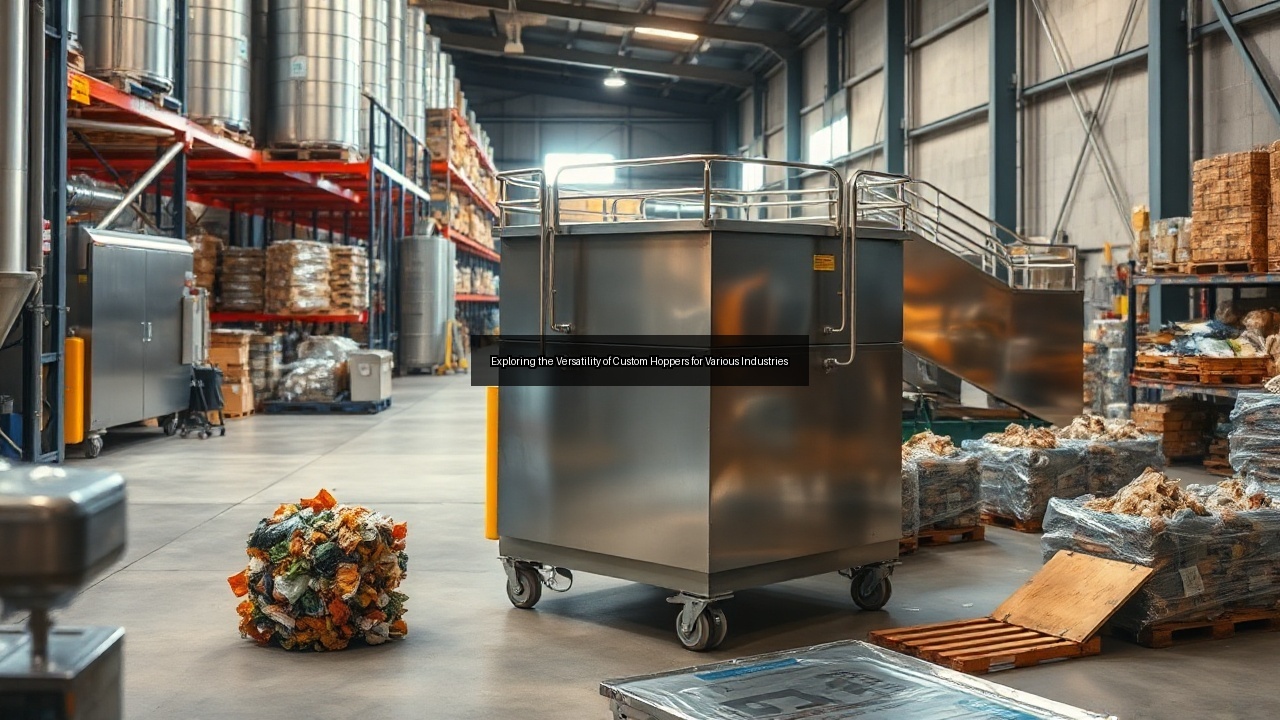
Several key components contribute to the functionality of custom process hoppers. The hopper's body, typically constructed from stainless steel or sheet metal, provides the structural integrity necessary to handle various materials. Gates at the bottom allow for controlled dispensing, enabling precise material flow into downstream processes. Additionally, the design often incorporates sloped sides—often in a cone shape—to facilitate the easy movement of materials, reducing the risk of clogs and ensuring a steady output. Some hoppers also integrate features like guardrails and casters, enhancing safety and mobility. These components work together to create a reliable system for material handling, making custom process hoppers an essential fixture in manufacturing environments.
Applications of Custom Hoppers Across Industries
Custom Hoppers in Recycling: Managing Recyclables Effectively
In the recycling industry, custom hoppers play an essential role in effectively managing recyclables. These hoppers enable facilities to store and sort materials like plastics, metals, and paper efficiently. With the increasing emphasis on sustainability and waste reduction, recycling operations increasingly rely on advanced hoppers to streamline their processes. Custom hoppers can be designed to accommodate specific types of recyclables, incorporating features that facilitate easy sorting and separation. For example, specialized hoppers can include multiple compartments for different materials, making it easier to maintain organized workflows. Moreover, their robust construction ensures that they withstand the wear and tear of handling various materials, allowing for reliable long-term use. By optimizing the management of recyclables, companies in the recycling sector enhance their operational efficiency and contribute to a greener future.
The Use of Hoppers in Construction: Handling Concrete and Scrap
Construction sites often present unique challenges when it comes to material handling, and custom process hoppers address these challenges effectively. These hoppers are designed to manage heavy bulk materials such as concrete, aggregates, and scrap metal. Their robust construction allows them to handle the weight and density of these materials without compromising structural integrity. In addition, the design of custom hoppers can include features tailored specifically for construction needs, such as larger gates for easier dispensing of concrete mixes or reinforced walls to prevent spillage. By utilizing hoppers in construction, companies improve productivity and safety. Workers can dispense materials quickly and efficiently, minimizing downtime and enhancing workflow on job sites. The result is a streamlined construction process that meets deadlines and maintains high safety standards.
Hoppers in Warehousing: Enhancing Productivity with Conveyor Systems
Custom hoppers significantly enhance productivity in warehousing environments, particularly when integrated with conveyor systems. These systems facilitate the automated movement of materials, reducing the need for manual handling and speeding up processes. Custom hoppers serve as storage solutions that feed materials into conveyor belts, ensuring a consistent flow of products throughout the warehouse. Their design can include various features, such as adjustable heights and slopes, to accommodate different types of conveyor systems. By implementing custom hoppers in warehousing operations, companies can optimize space, reduce labor costs, and improve overall efficiency. Additionally, the use of hoppers helps maintain organization within warehouses, allowing for easier tracking and retrieval of materials. The combination of hoppers and conveyor systems creates an efficient, streamlined operation that meets the demands of modern warehousing.
Design Considerations for Custom Process Hoppers
Materials: Choosing Between Stainless Steel and Sheet Metal
The choice of materials is a fundamental consideration when designing custom process hoppers. Stainless steel, known for its durability and resistance to corrosion, is an excellent option for industries that handle food or chemicals. This material ensures that the hoppers maintain hygiene standards and extend their lifespan. On the other hand, sheet metal hoppers often provide a cost-effective solution for less demanding applications. While these might not offer the same level of durability as stainless steel, they can still perform adequately in environments where corrosion is less of a concern. Ultimately, the decision hinges on the specific requirements of the industry and the nature of the materials being handled. Companies must assess factors such as exposure to moisture, potential contamination, and the need for structural integrity before finalizing their choice of materials.
Dimensions and Shapes: The Importance of Cone Design
Dimensions and shapes significantly influence the performance of custom process hoppers. A well-designed hopper often features a cone shape, which encourages efficient flow and minimizes the risk of material clogs. The angle of the cone must be carefully calculated to ensure that materials move smoothly from the hopper into the next phase of processing. Additionally, the overall dimensions of the hopper should align with the volume of materials being handled. A properly sized hopper prevents overflow and ensures that there is sufficient storage capacity for operational needs. Companies must work closely with fabrication experts to determine the ideal dimensions and shapes for their custom hoppers, considering factors such as the type of materials, the intended flow rate, and the specific requirements of their processes. This attention to detail can significantly impact productivity and reduce operational inefficiencies.
Incorporating Guardrails and Casters for Safety and Mobility
Incorporating guardrails and casters into the design of custom process hoppers enhances both safety and mobility. Guardrails provide a protective barrier around the hopper, preventing accidental falls or material spillage, which is especially important in busy manufacturing or construction environments. Casters allow for the easy movement of hoppers, enabling companies to reconfigure their workspace as needed. This mobility is particularly beneficial in warehouses and recycling facilities where operational needs frequently change. By designing hoppers with these features, companies not only improve workplace safety but also enhance productivity by streamlining material handling processes. Ultimately, the integration of guardrails and casters fosters a safer and more efficient work environment, ensuring that employees can operate effectively without compromising their well-being.